The publication
The year 2030 will mark the sixth centenary of the Order of the Golden Fleece, founded in 1430 by Duke Philip the Good. This book, now in preparation, will revisit six centuries of European history through the lens of the Order.
It is conceived as a reference work: about 400 pages, some 120,000 words and about 400 illustrations, many of them previously unpublished.
The narrative thread
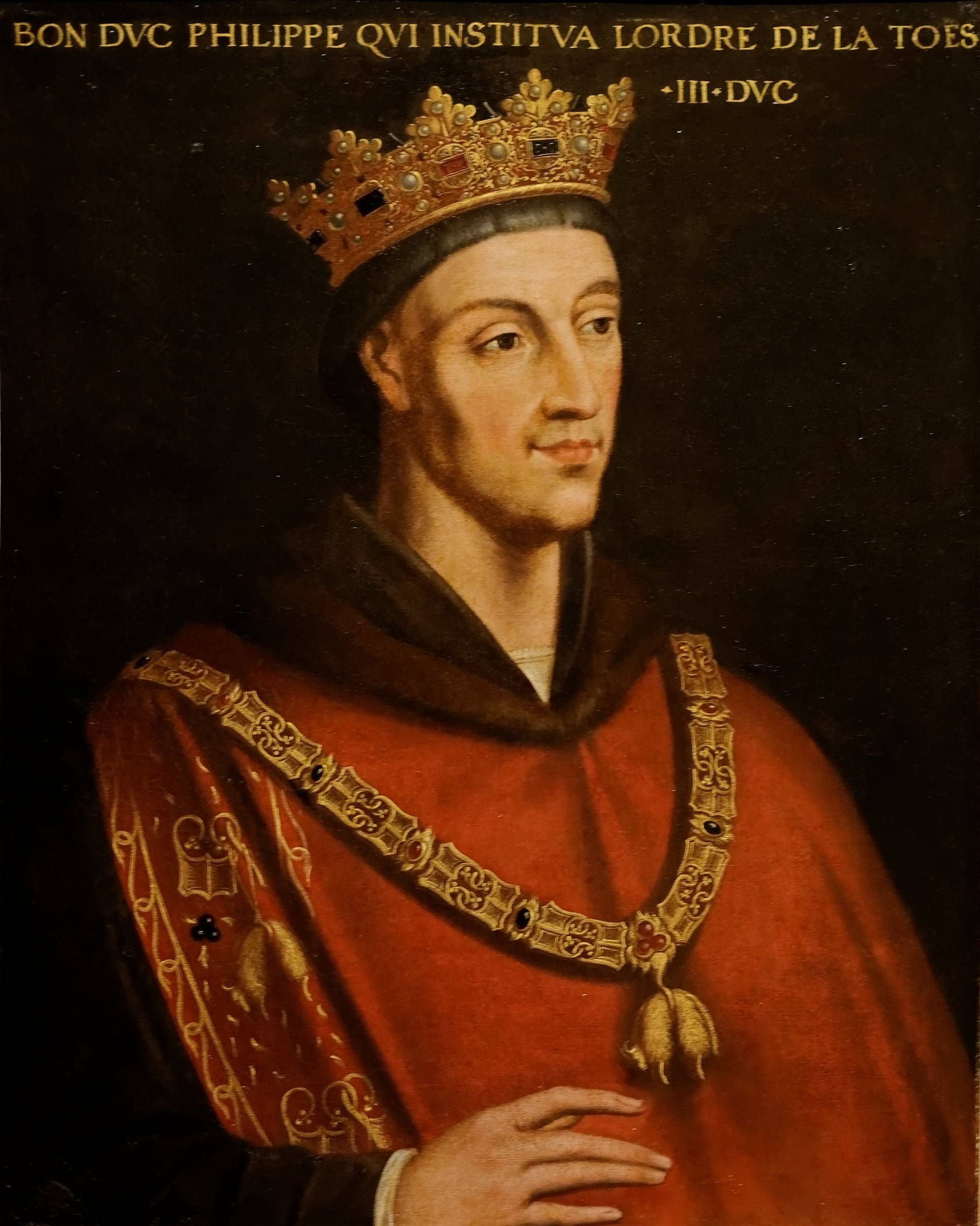
The book is built around the geopolitical ambition of Philip the Good: a powerful Burgundian state that would restore the old kingdom of Lotharingia and link the North Sea to the Mediterranean.
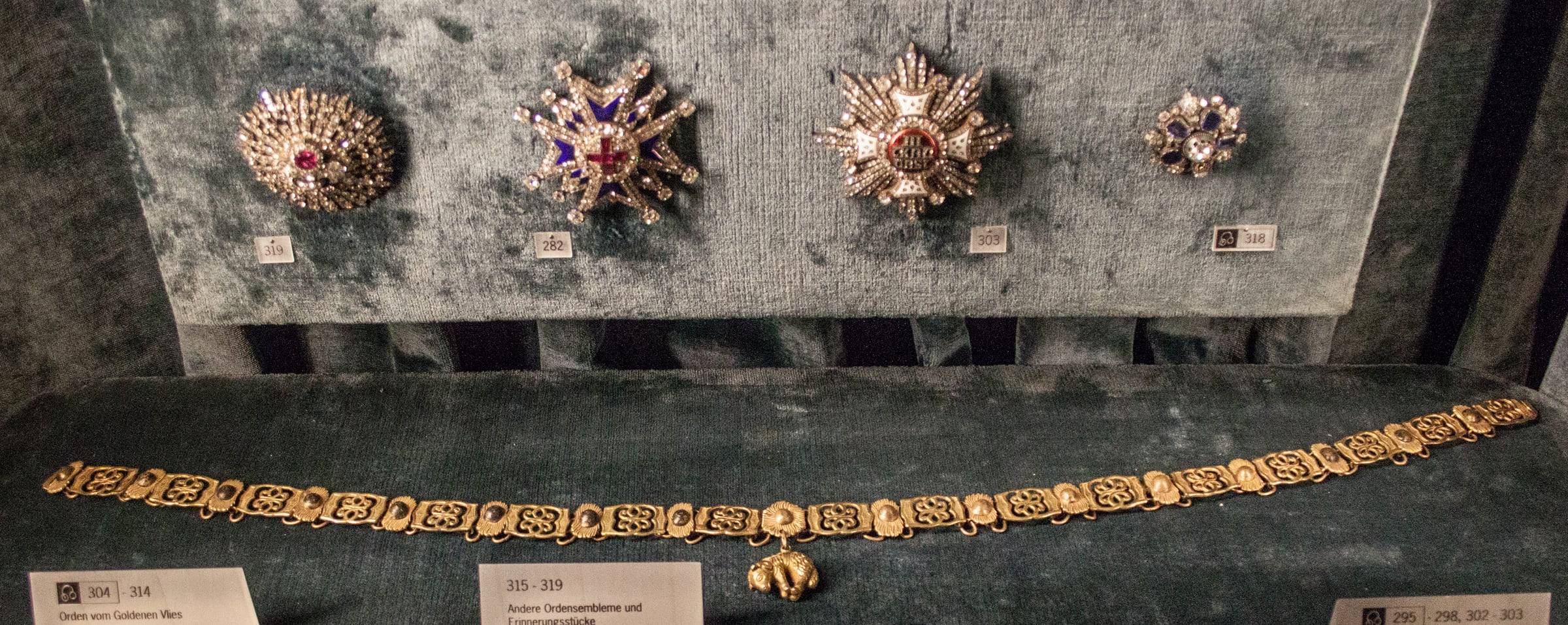
The collar of the Golden Fleece was the supreme diplomatic tool of that project. It bound the high nobility to the Burgundian state, alongside strategic marriages and, where necessary, military force.
The book follows this history from its unified phase to the split of the Order, at the beginning of the 18th century, into an Austrian and a Spanish branch. Both coexist to this day.
The same year marks the bicentenary of the Kingdom of Belgium. The book argues that Belgium was not an artificial creation of the great powers at the London Conference, and that its roots lie deep in the unification of the Burgundian territories.
Contents
The essays will follow the Order from its Burgundian beginnings to the present day. Among the themes:
- 15th century
- The Burgundian state of Philip the Good and Charles the Bold, and the Order as an instrument for binding the high nobility to it.
- 15th–16th centuries
- The nature of the Order under the Habsburgs, from Maximilian to Charles V and Philip II.
- 16th–17th centuries
- Crises of loyalty during the Revolt of the Netherlands and the wars of religion.
- 18th century
- The split that followed the death of Charles II of Spain in 1700, into an Austrian and a Spanish branch.
- Early 19th century
- The Napoleonic interlude.
- 19th–20th centuries
- The Order’s place in the Austro-Hungarian Empire.
- After 1918
- Its survival after the fall of the monarchies.
- 20th century
- Its opposition to National Socialism.
- Today
- Its evolution into an order of merit in Spain and a dynastic confraternity in Austria.
The editors
René Vermeir
Ghent University
Scientific editor
Sonja Dünnebeil
Austrian Academy of Sciences, Vienna
Scientific editor
The publishers
The book is published by Lannoo and Marot, within an international publishing consortium.
Under the editors’ direction, a rigorous plan of 15 thematic essays has been drawn up, written by some 20 historians from 9 European countries. The essays will draw on the most recent research, in a language and style open to a broad, cultivated readership.
The volume
Scholarly essays will set the Order’s course within the great political, social, dynastic and religious changes that shaped the continent.
- Format
- A large-format, richly illustrated art book
- Extent
- About 400 pages and 120,000 words
- Illustrations
- About 400, many previously unpublished, from private and public collections, including the Imperial Treasury in Vienna
- Essays
- 15 thematic essays
- Authors
- Some 20 historians from 9 European countries
- Editors
- René Vermeir (Ghent University) and Sonja Dünnebeil (Austrian Academy of Sciences, Vienna)
- Languages
- Six simultaneous editions: German, English, Spanish, French, Dutch and Hungarian
- Publication
- Late 2029
Six languages
The book will appear simultaneously in six languages: German, English, Spanish, French, Dutch and Hungarian.