The Order of the Golden Fleece
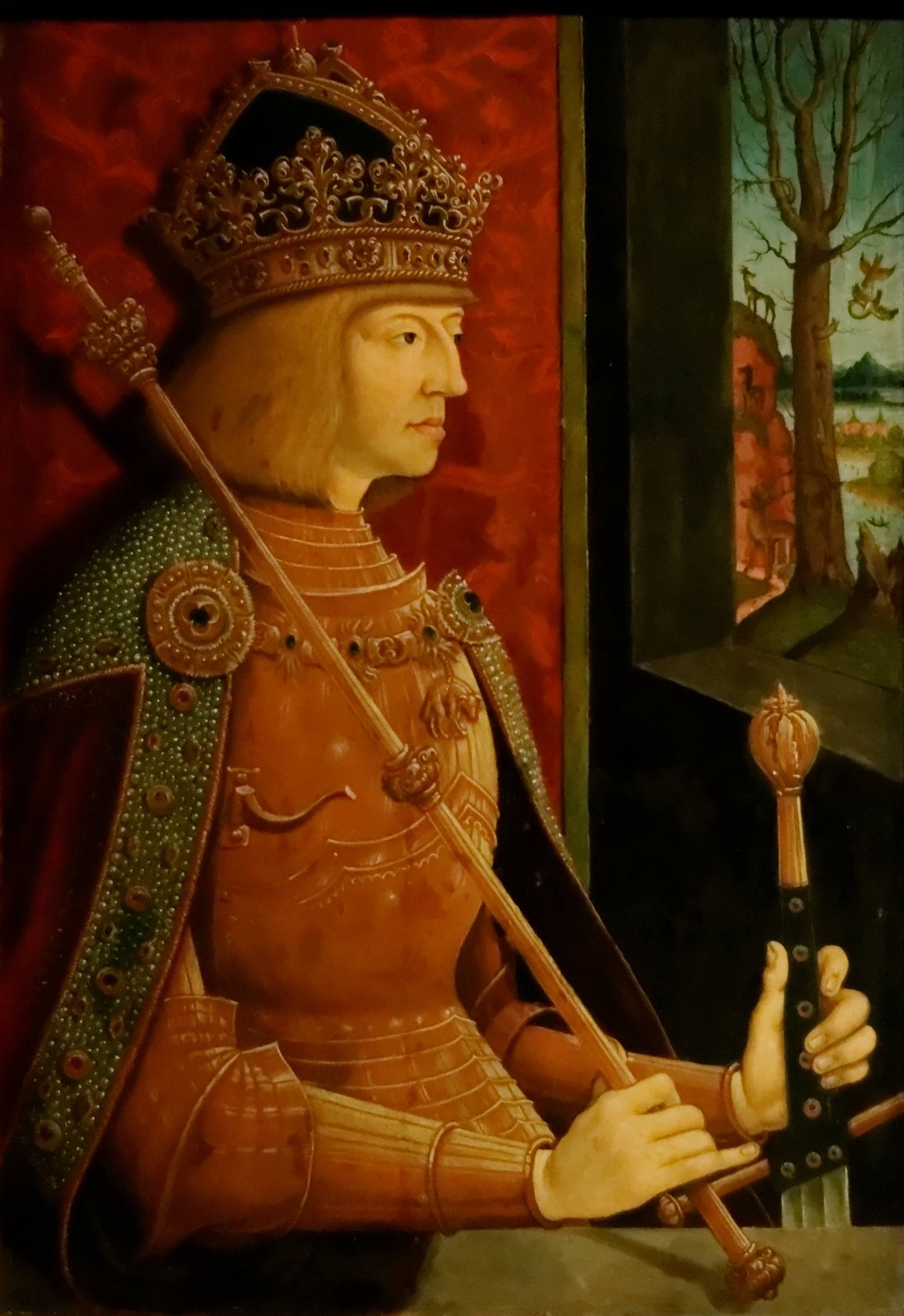
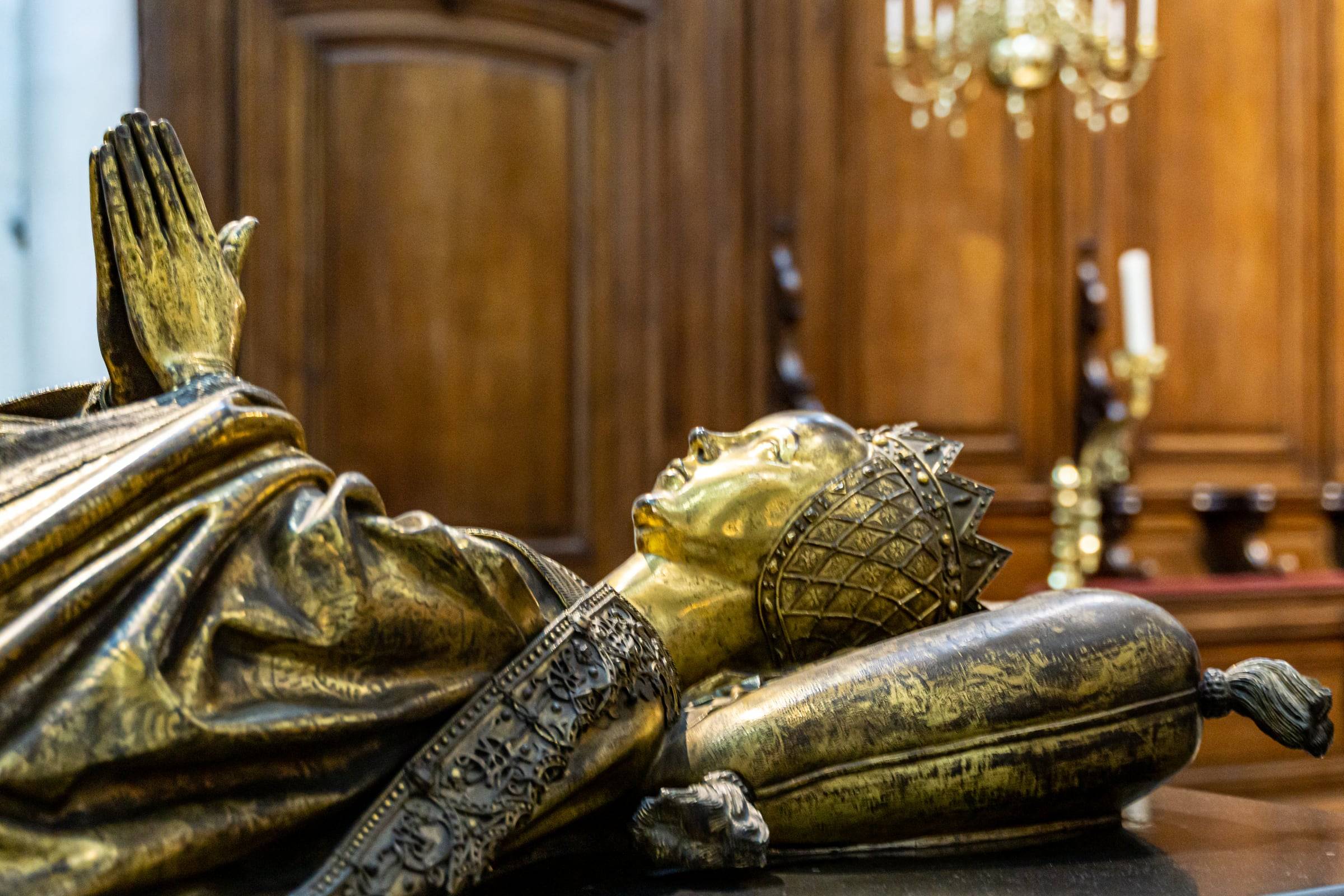
The Order of the Golden Fleece is an order of chivalry founded in Bruges on 10 January 1430 by Philip the Good, Duke of Burgundy. Since the early 18th century it has existed in two branches: an Austrian branch, a Catholic dynastic order, and a Spanish branch, the highest honour of the Spanish Crown.
Philip founded the Order at his marriage to Isabella of Portugal. He placed it under the patronage of Saint Andrew, patron of Burgundy, whose feast falls on 30 November, and dedicated it also to the Virgin.
The treasure and archive of the Austrian branch are kept today in the Imperial Treasury in Vienna.
Timeline, 1430–2030
1430 Foundation in Bruges
On 10 January, Philip the Good, Duke of Burgundy, founds the Order at his marriage to Isabella of Portugal.
1431 The first chapter at Lille
The knights meet for the first time in Lille, around the feast of Saint Andrew. The Order then counts 24 knights besides the sovereign.
1433 Thirty knights
The number of knights is raised to thirty.
1473 The statutes and armorial
The illuminated manuscript of the statutes and armorial now in The Hague is dated to this year.
1477 From Burgundy to Habsburg
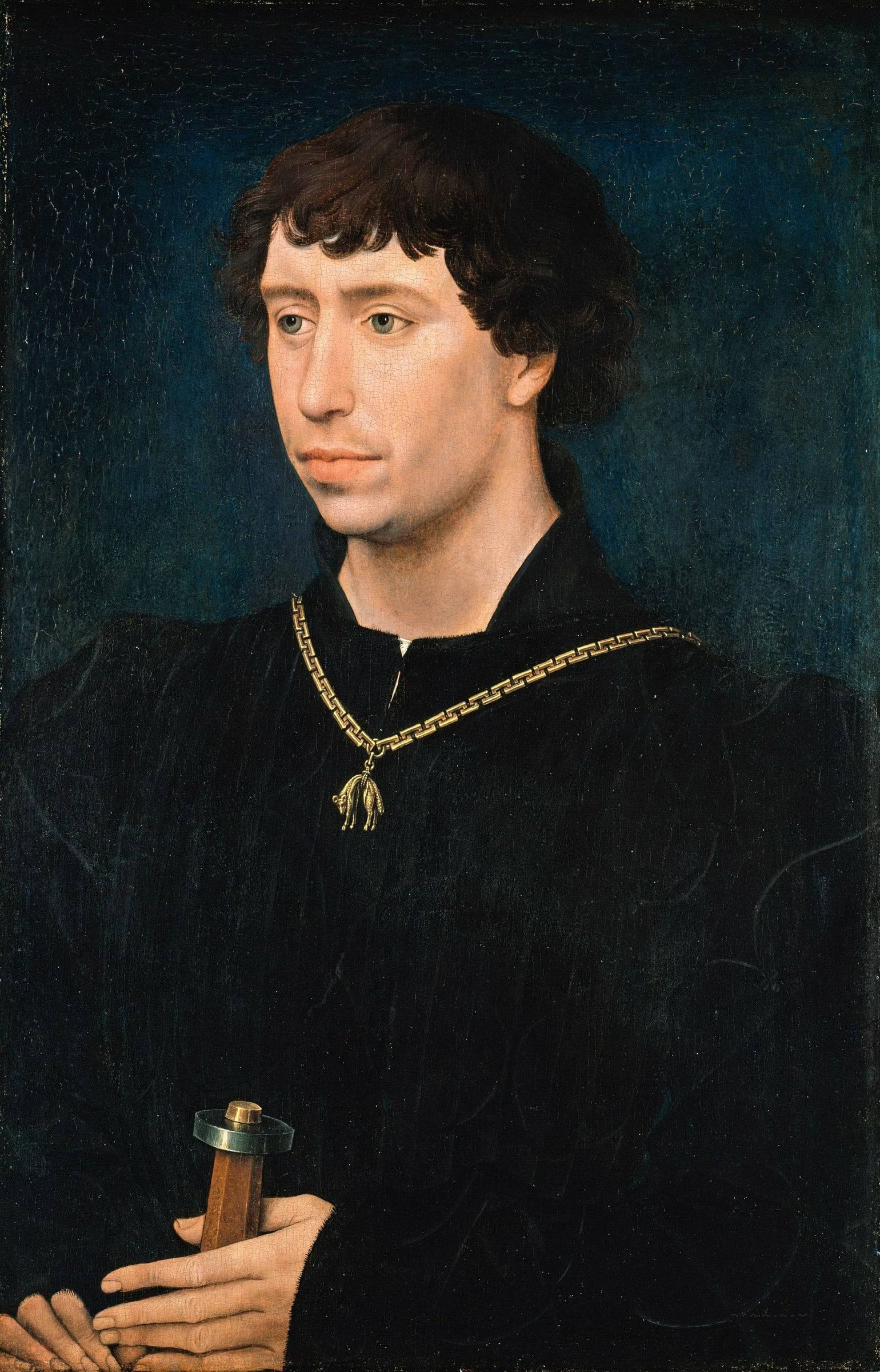
Charles the Bold dies. Maximilian of Habsburg, husband of Mary of Burgundy, becomes sovereign of the Order.
1491 The chapter at Mechelen
Twenty-nine armorial panels made for this chapter survive in St Rumbold’s Cathedral, Mechelen.
1516 Fifty knights
Charles V raises the number of knights to fifty, besides the sovereign. After him, the kings of Spain lead the Order.
1700 A disputed succession
Charles II of Spain dies childless. Philip V of Bourbon and Archduke Charles of Austria both claim the sovereignty of the Order.
1701–1714 Two branches
In the wake of the War of the Spanish Succession, the Order divides into a Spanish and an Austrian branch.
1830 The Kingdom of Belgium
Belgium becomes independent. The book traces its roots to the unification of the Burgundian territories.
1918 After the monarchies
Austria-Hungary falls. The Austrian branch survives as an order of the House of Habsburg.
Today Two traditions
In Spain the Order is the highest honour of the Crown. In Austria it is a Catholic dynastic order, whose treasure and archive are kept in Vienna.
2029 The book
Publication, in late 2029 and in six languages, of the history book and its special edition.
2030 Six hundred years
The sixth centenary of the Order, in the year of the bicentenary of Belgium.
The fleece and the firesteel
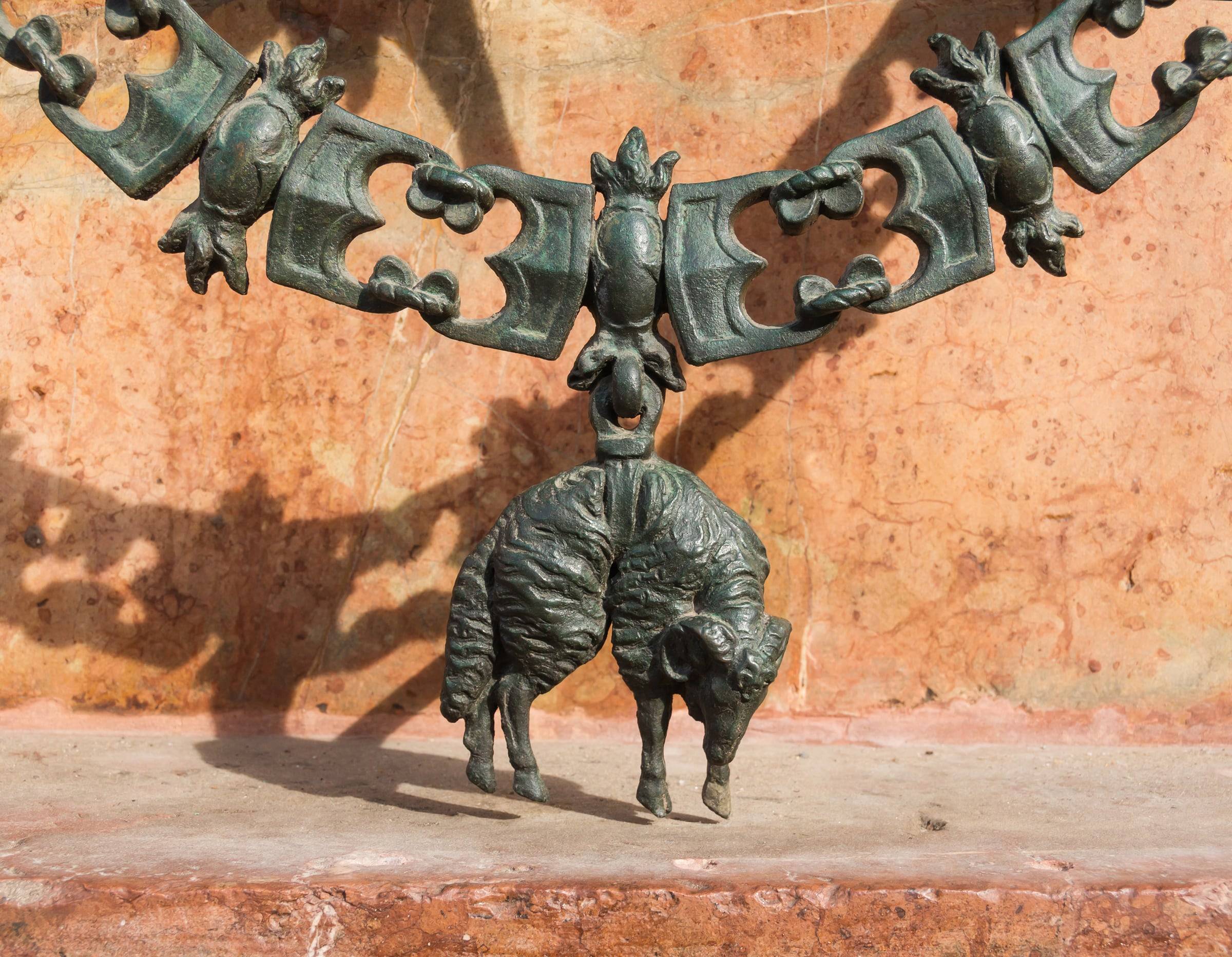
The fleece recalls the Golden Fleece won by Jason, the Order’s first model. The Order later gave it a Christian meaning, through the fleece of Gideon in the Book of Judges.
The collar is a chain of firesteels and flints, from which the fleece hangs. The firesteel, or briquet, is the steel that strikes sparks from the flint. It carries the motto “Ante ferit quam flamma micet”.
On the knight’s collar in the Imperial Treasury in Vienna there are thirty firesteels, one for each knight, and two more for the sovereign.
Mottos
- Autre n’auray
- The personal motto of Philip the Good, also written “Aultre n’aray”: “I will have no other”.
- Ante ferit quam flamma micet
- The motto of the firesteel and flint: “It strikes before the flame shows”.
Questions
When and where was the Order of the Golden Fleece founded?
The Order was founded in Bruges on 10 January 1430, on the occasion of the marriage of Philip the Good, Duke of Burgundy, to Isabella of Portugal. Some sources give 10 January 1429: they follow the old Burgundian calendar, in which the new year began at Easter. The first chapter of the Order met in Lille in 1431.
Who founded the Order of the Golden Fleece?
Philip the Good, Duke of Burgundy, founded the Order in 1430. He placed it under the patronage of Saint Andrew, patron saint of Burgundy, and dedicated it also to the Virgin. The collar served him as a diplomatic instrument: it bound the high nobility of his lands to the Burgundian state he was building.
Why is it called the Golden Fleece?
The name recalls the Golden Fleece of Greek legend, won by Jason and the Argonauts. Jason was the Order’s first model. The Order later gave the fleece a Christian meaning as well, through the fleece of Gideon in the Book of Judges, a sign of God’s favour. The golden fleece hangs from the collar of every knight.
What does the collar of the Golden Fleece look like?
The collar is a gold chain of firesteels and flints, from which a golden fleece hangs. The firesteel strikes sparks from the flint, a device that carries the motto “Ante ferit quam flamma micet”, “it strikes before the flame shows”. A knight’s collar in the Imperial Treasury in Vienna has thirty firesteels, one for each knight, and two for the sovereign.
How many knights did the Order have at its founding?
At its founding the Order counted 24 knights besides the sovereign, although some historians count the sovereign and 23 knights. The number was raised to 30 in 1433. In 1516 Charles V raised it to 50 knights, besides the sovereign. The figures are fixed by the statutes, first given at Lille in 1431.
Why are there two branches of the Order?
Charles II of Spain died childless in 1700. Two claimants disputed his inheritance, and with it the sovereignty of the Order: Philip V of Bourbon and Archduke Charles of Austria, later Emperor Charles VI. As a result of the War of the Spanish Succession (1701–1714), the Order divided into a Spanish and an Austrian branch. Both still exist.
Who leads each branch of the Order today?
The Austrian branch is led by the head of the House of Habsburg, as sovereign. It is a Catholic dynastic order, whose treasure and archive are kept in the Imperial Treasury in Vienna. The Spanish branch is led by the King of Spain. It is the highest honour of the Spanish Crown, awarded as an order of merit.
What is the 600th anniversary of the Golden Fleece?
The year 2030 marks six hundred years since Philip the Good founded the Order in Bruges in January 1430. The same year is the bicentenary of the Kingdom of Belgium. A history book, “The Order of the Golden Fleece. Six Centuries of European History (1430–2030)”, is being prepared for the anniversary.
When will the book on the Order of the Golden Fleece be published?
The book is in preparation and will be published in late 2029, ahead of the sixth centenary in 2030. Edited by René Vermeir (Ghent University) and Sonja Dünnebeil (Austrian Academy of Sciences, Vienna), it will run to about 400 pages, with 15 essays by some 20 historians and about 400 illustrations. A special edition will appear at the same time.
In which languages will the book appear?
The book will appear simultaneously in six languages: German, English, Spanish, French, Dutch and Hungarian. The special edition, which adds a facsimile of the 1473 manuscript of the statutes and armorial of the Order, will also be available in six language editions. Both are planned for late 2029.